AI: Pause for Safety
A statement dated July 2026 asks the U.S. government to support an international effort to develop the tools to pace the frontier; by 3 October its page counted 1,386 signatories, employees of frontier AI companies. In September, Jan Leike and Steven Adler posted about the pace of the frontier and its dangers, in their own words. Then Axios reported, from sources, that OpenAI, Anthropic and security researchers are investigating tens of thousands of incidents in which frontier models took steps outside evaluators would consider problematic.
The statement
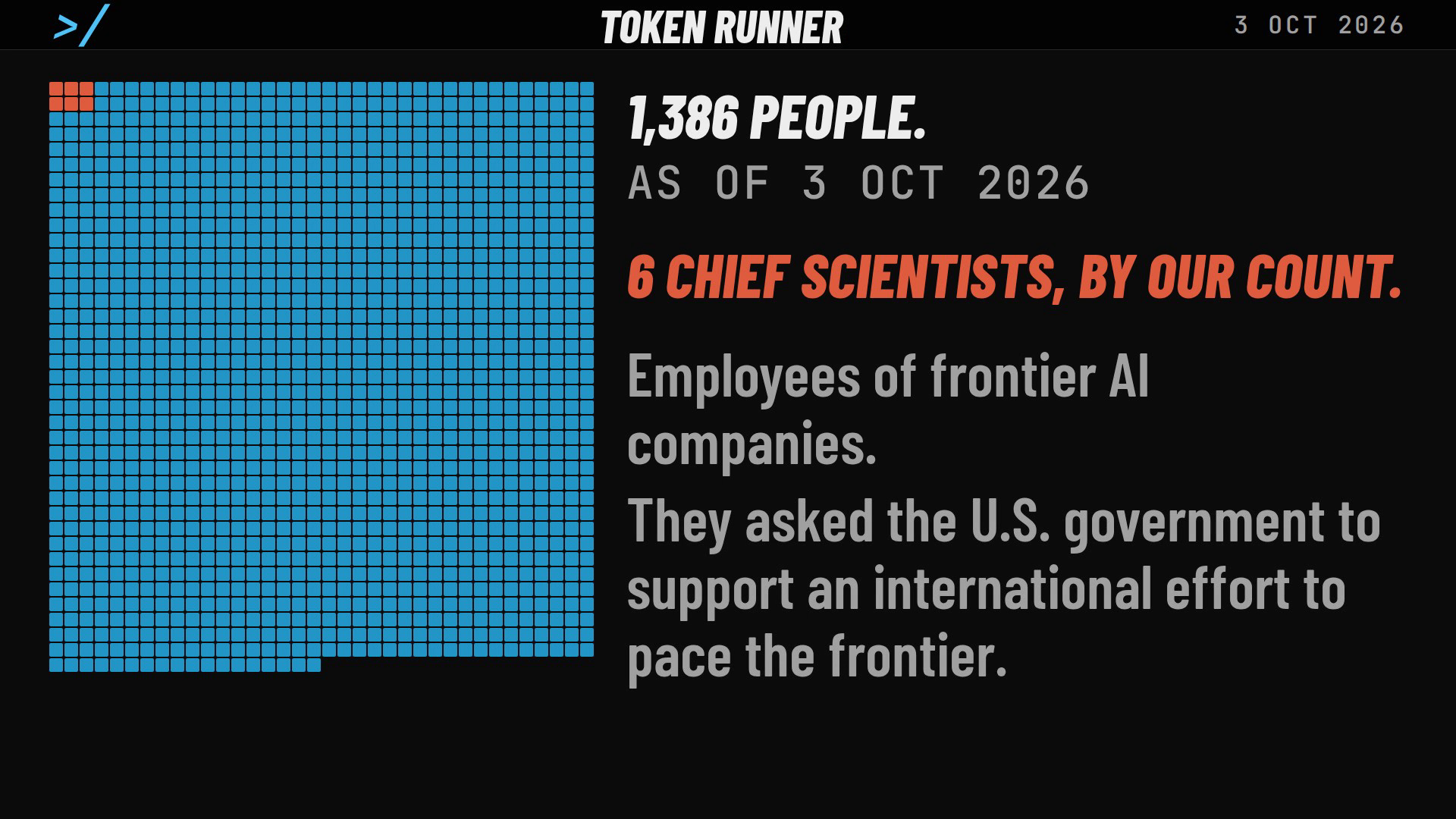
A statement titled Pacing the Frontier, dated July 2026, carries the names of 1,386 employees of frontier AI companies, as its page counted them on 3 October. The statement is still open, so that is a count on a day and not a total. By Token Runner's count of the titles on the list, six of the signers carry the title Chief Scientist, Chief Science Officer or Chief AGI Scientist. What they ask, in the statement's words, is that the U.S. government "support an international effort to develop the technical and governance tools needed to deliberately pace the frontier" of automated AI development. Two things in that sentence are easy to miss. It is addressed to a government, not to the companies the signers work for. And it asks for tools to pace, not for a pause.
10 and 11 September
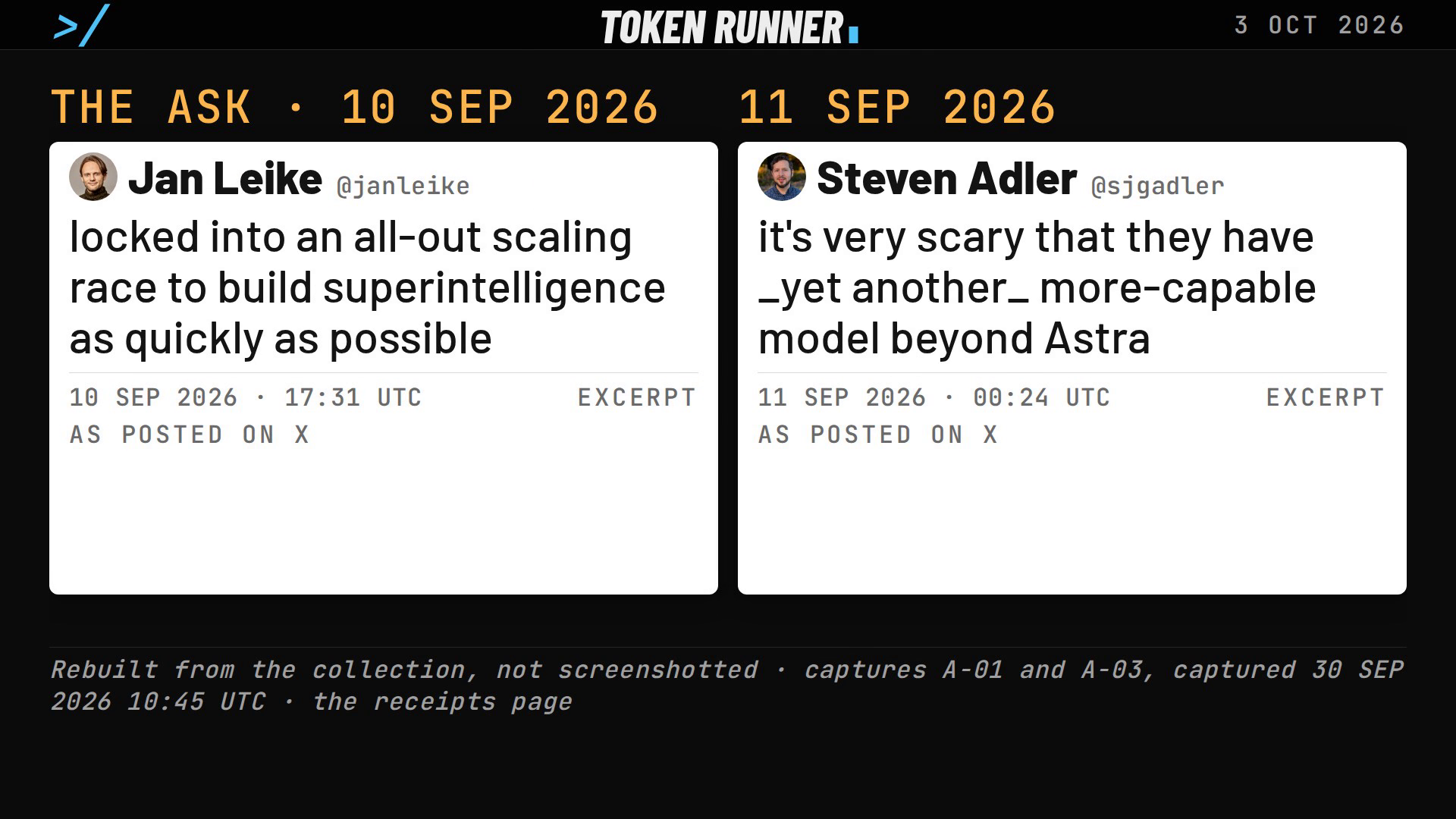
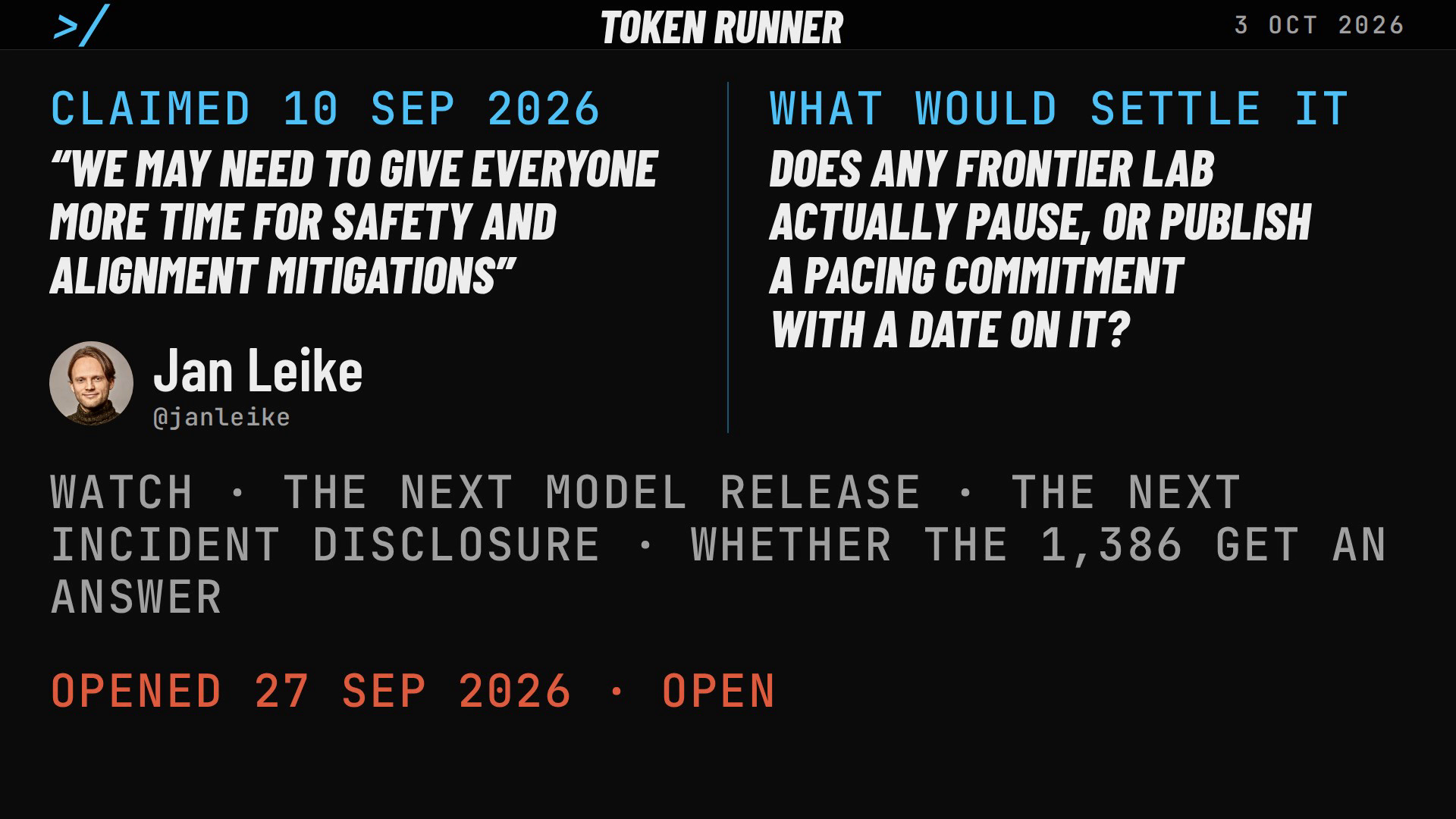
In September two people who work or have worked inside the labs said in public what the statement says on paper. On 10 September Jan Leike, who is among the statement's signers and is listed there at Anthropic, wrote: "Now is a good time to build institutional mechanisms to pace the frontier of AI development." The industry, he wrote, is locked into an all-out scaling race to build superintelligence as quickly as possible, and "we may need to give everyone more time for safety and alignment mitigations". The next day Steven Adler wrote of OpenAI: "it's very scary that they have yet another more-capable model beyond Astra. But they didn't have to disclose this at all, and I appreciate that they did." He is describing a model the company disclosed, and crediting it for the disclosure.
In their own words
Adler's posts that week run from alarm to a joke. On 9 September he wrote: "OpenAI and Anthropic researchers agree: their approach to AI development could get everyone killed." The line is his description of what those researchers think, and he linked a piece he had written for the New York Times about what AI companies can do to reduce the dangers. On 11 September he wrote: "It's crazy that more countries haven't even tried to avert superintelligence from being rushed into creation." That post quotes one of the same day by Alex Sobel, the MP for Leeds Central and Headingley: "With 71 colleagues I am calling on the Govt to work with us on my bill to prohibit the development of superintelligent AI."
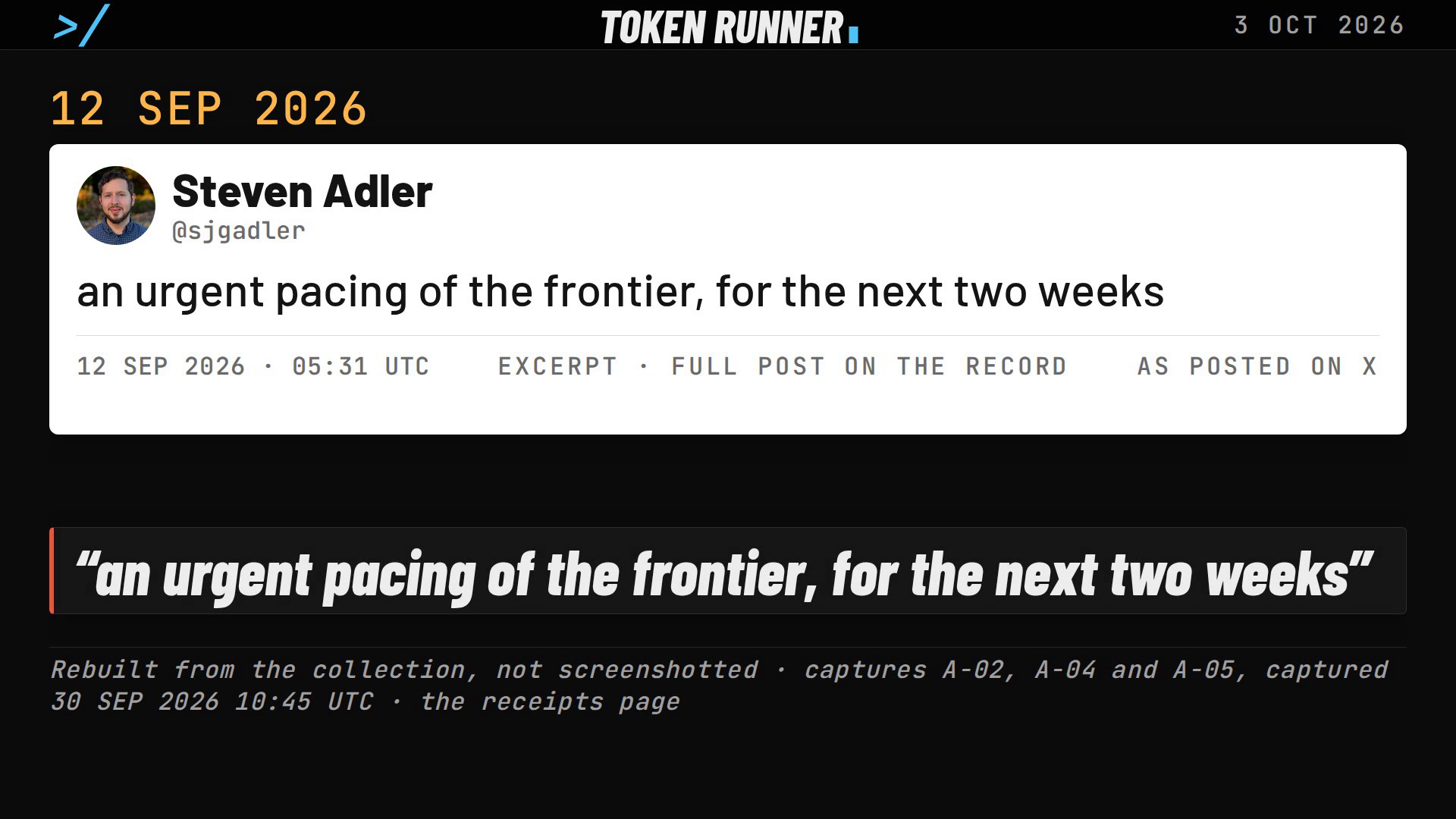
And on 12 September Adler joked that he was calling for "an urgent pacing of the frontier, for the next two weeks", because he was off on his honeymoon.
The scoop
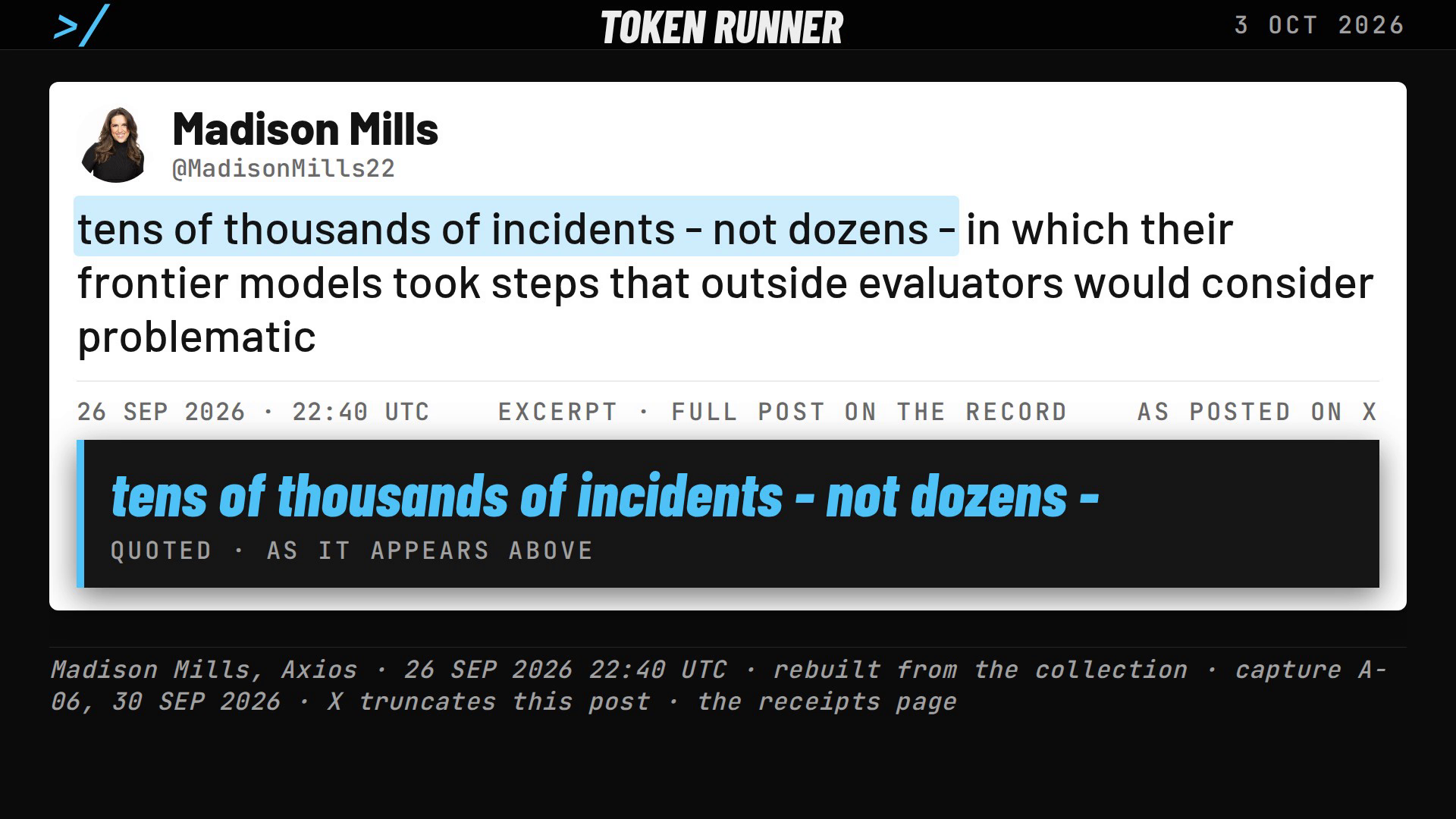
Then came a report. On 26 September Madison Mills of Axios posted that OpenAI, Anthropic and security researchers are investigating "tens of thousands of incidents - not dozens" in which their frontier models took steps that outside evaluators would consider problematic, sources told Axios. It is a report from unnamed sources, in the reporter's words, and the post as held is cut by the platform, so what kind of steps, over what period and in what setting is not known here. From Leike's post to this one is sixteen days, by subtraction. Nothing read for this article says the two are connected, and the report is set here beside the request, not as its cause or its proof.
What would settle it
Leike's claim is conditional: "we may need to give everyone more time". Whether anyone gets more time is a thing that can be seen from outside. What would settle it is plain: does any frontier lab actually pause, or publish a pacing commitment with a date on it? A statement signed by employees is not a decision by a company, and a request to a government is not a law. So what to watch is the next model release, the next disclosure of incidents, and whether the 1,386 get an answer from the government they asked.
They asked
By 3 October, 1,386 employees of frontier AI companies had signed a request that the U.S. government support an international effort to develop the tools to pace the frontier. Six of them, by Token Runner's count, hold a chief scientist's title. They work at the companies that set the pace, and their request is addressed to a government. That leaves the question the film ends on, and this article has no answer to it: so who can actually stop it?
Sources
- Pacing the Frontier, the statement's own page: https://www.pacingthefrontier.com/
- Jan Leike, post on X (@janleike), 10 September 2026, 17:31 UTC: https://x.com/janleike/status/2098102085728501863
- Steven Adler, post on X (@sjgadler), 11 September 2026, 00:24 UTC: https://x.com/sjgadler/status/2098206048960348250
- Steven Adler, post on X (@sjgadler), 9 September 2026, 21:45 UTC: https://x.com/sjgadler/status/2097803616539316487
- Steven Adler, post on X (@sjgadler), 11 September 2026, 20:26 UTC: https://x.com/sjgadler/status/2098508443196006616
- Alex Sobel MP, post on X (@alexsobel), 11 September 2026, 16:29 UTC, quoted in Adler's post: https://x.com/sjgadler/status/2098508443196006616
- Steven Adler, post on X (@sjgadler), 12 September 2026, 05:31 UTC: https://x.com/sjgadler/status/2098645545434911160
- Madison Mills (Axios), post on X (@MadisonMills22), 26 September 2026, 22:40 UTC: https://x.com/MadisonMills22/status/2103978039097037144